

With growing concern over the environment in recent decades, many industries are looking to improve their ways of working and reduce negative impacts on the environment, and construction is no different.
Sustainable housing is becoming an increasingly important factor for house buyers because individuals are also adjusting their behaviours to be more environmentally conscious and because sustainable homes are more efficient to run.
What is sustainable housing?
Sustainable homes are designed in such a way as to make the best use of materials – both while building the house and during its lifetime. This means using better-quality building materials in a more considered and conservative way and enabling the property to make better use of electricity and water.
What contributes to a house being sustainable?
Many elements contribute to a home’s sustainability, including the construction processes, insulation, ventilation & heating systems, plumbing and sources of renewable energy.
Construction
The materials used in constructing a new building have a huge part to play in that building’s sustainability levels, and three main questions should be asked of any material used:
- Is it responsibly sourced?
- Is the material sustainable?
- Is it environmentally friendly?
It’s not just the materials that are important, it’s how they’re used as well. Designing and building houses to standards such as Passivhaus also have a huge impact. Passivhaus is a voluntary standard created by the Passivhaus Institute in Germany and relates to how a building is built. The end result requires very little additional help to keep the home warm, instead being heated by its occupants’ activities and renewable energy.
Insulation
Using quality materials to make properties airtight, as well as modern approaches, means that a property is more efficient at preserving the temperature inside, whether that be heat on a cold day or coolness on a hot day, and using less energy to maintain that internal temperature.
Roof insulation can save up to 50% of thermal energy, with wall insulation saving up to 25%.
Windows are also an important part of a building’s defence against thermal leaks, and their insulation level can be measured with an Ug-value, where 0 is the best level of protection. The typical Ug-value for a double-glazed window is 1.2 while that of a triple-glazed window is 0.6-0.9. For context, a single-glazed window can have an Ug-value as high as 5.9.
Ug-value aside, gas-filled windows are tailored for cool climates and coated windows are more beneficial in warmer climates.
Plumbing
Incorporating greywater and rainwater into a property’s plumbing system reduces the amount required from external sources. Greywater, the generally clean water from sinks, baths and washing machines, can be used to flush toilets and rainwater can be used to irrigate gardens.
Low-flow fixtures contribute to water savings by allowing a smaller amount of water through and can come in the form of taps, showerheads and toilets.
Low-flow toilets save 20-60% of water compared to traditional toilets. Because low-flow toilets rely partially on gravity, the supply pipes they use need to be angled correctly, but this is much less of a problem when installing low-flow toilets into new builds than it can be when upgrading an existing system.
Renewable energy sources
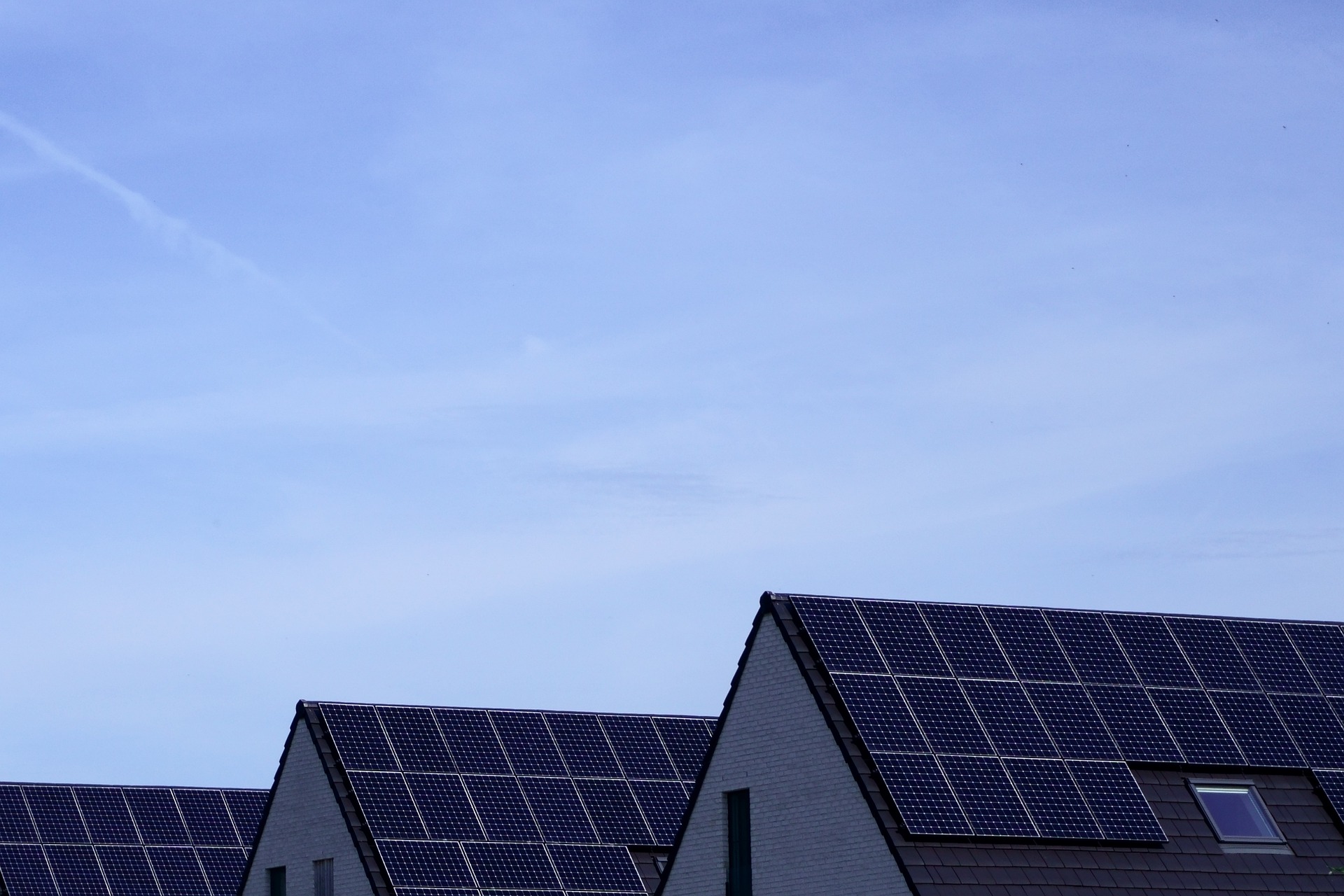
Houses being able to generate the energy they run on is key to sustainability. The most popular route to residential renewable energy is through solar panels situated on the roof; these photovoltaic (PV) panels can convert energy from the sun’s rays, but they’re not the only way for a house to harness renewable energy.
Wind turbines are also available in residential sizes, with the wind turning internal turbines to generate power.
For developments near flowing water, hydroelectric systems can be used to generate power by converting the energy of running water into usable power, and have been doing so since the 19th century.
What’s the business value in sustainable housing?
A 2015 study by Nielsen has found that consumer brands that demonstrate commitment to sustainability outperform those that don’t, and 66% of global respondents confirmed they’re willing to pay more for sustainable goods, up from 55% and 50% in the preceding years. This attitude to sustainability is most prevalent among Millennials and Gen Z’ers, suggesting a growing trend in the coming decades – 73% of millennials are willing to pay more for an environmentally conscious property.
The growing focus on more eco-friendly building materials and the lower cost to run sustainable properties over the years make them an easy sell to prospective buyers.
Another selling point is that sustainable houses built from quality materials should also require less maintenance than traditional homes.
Research by Money Supermarket found that 54% of buyers would prefer to buy or rent a home with a sustainability stamp of approval and the majority said it’s important for them that the property has sustainable features like triple glazing and solar panels.
A study by NAHB (National Association of Home Builders) further confirms that millennials are happy to invest in sustainable housing and eco-friendly home builders in return for lower utility bills.
How HBB Solutions can help
As property-buying experts who specialise in repairing broken chains and speeding up the purchase process, we can buy your potential customers’ old homes so they can move into your new developments. Housebuilders who work with us benefit from more buyers, faster sales processes and minimised risk of buyers pulling out.